Kinstellar, working alongside Noerr, has advised Strabag on the Romanian, Croatian, Czech, and Montenegrin aspects of its EUR 100 million acquisition of WTE Wassertechnik from EVN. Freshfields advised EVN.
 CEE Legal Matters
In-depth coverage of the news and newsmakers that shape Europe's emerging markets
CEE Legal Matters
In-depth coverage of the news and newsmakers that shape Europe's emerging markets
Kinstellar, working alongside Noerr, has advised Strabag on the Romanian, Croatian, Czech, and Montenegrin aspects of its EUR 100 million acquisition of WTE Wassertechnik from EVN. Freshfields advised EVN.

The Ministry of Economic Development has conducted a public consultation on the draft Law on Class Actions. The primary reason for adopting a special law which regulates matters related to the collective protection of consumers is, above all, the harmonization of Montenegrin legislation with EU law, specifically with Directive (EU) 2020/1828 on representative actions for the protection of the collective interests of consumers and repealing Directive 2009/22/EC. The goal is to prevent and sanction mass violations of consumer rights by traders in the market, while also ensuring fair compensation for harmed consumers. In this text, we briefly present the most important amendments and innovations introduced by the draft Law on Class Actions.

Injac Attorneys has advised Build Your Dreams on its market entry into Serbia and Montenegro.

JPM Partners has advised MFI Flex Credit on obtaining a license to operate as a microcredit financial institution from the Central Bank of Montenegro.
PPPs represent a long-term collaboration between the public and private sectors, enabling more efficient construction, maintenance, and management of infrastructure, with an optimal distribution of risks and financial obligations.
The Draft Law on Mediation in the Sale and Lease of Real Estate, following public consultation in the summer of 2023, is expected to be submitted to Parliament for adoption shortly.

Big law firms can coast on boring slogans. They’ve got the clout, the infrastructure, and the impressive list of past clients to do the talking. But if you’re a smaller firm and your website sounds like everyone else’s, you are disappearing into the beige background of legal marketing noise.
The European Accessibility Act (EAA), approved in 2019, takes effect on June 28, 2025. The Act requires a wide range of products and services – such as consumer electronics, vending machines, websites, and mobile apps – to meet accessibility standards for people with disabilities.
One of the most frequently asked questions by our clients during divorce proceedings concerns what exactly belongs to a spouse in relation to a company that was undoubtedly founded using the joint property of the spouses during the marriage, despite the fact that the spouse in question formally and legally does not hold the status of a founder or is not registered as the owner of a share in that company. In other words, the founding contribution amounted to 1 euro, and the company is now worth millions—what rights does each spouse have?
CEE Legal Matters is proud to introduce the latest in our Comparative Guides series. This one focuses on Bribery & Corruption in CEE.
Contributed by Doklestic Repic & Gajin.

CEE Legal Matters is proud to introduce the latest in our Comparative Guides series. This one focuses on Litigation in CEE.

Contributed by KBP Legal.
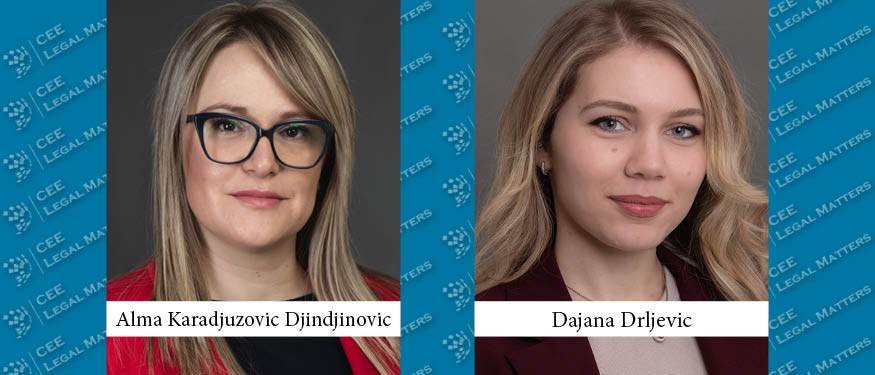
The word “fiduciary” originates from the Latin language and in translation means trust or pledge and dates back to Roman law and denotes a contract that is created when one party, the fiduciary (fiducians), hands over to another party a fiduciary (fiduciarius) something for ownership, and the fiduciary undertakes to return the same thing to the ownership of the fiduciary after the expiration of a certain term or the fulfillment of a certain condition. The fiduciary transfer of ownership rights i.e. fiduciary (“Fiduciary”) was introduced as a legal institute into the Montenegrin legal system through the Law on Fiduciary Transfer of Rights (“Official Gazette RCG No 23/96”) and after that, it continued to live under the Law on Property Relations (“Official Gazette CG No 19/09”).

On the evening of April 1, 2025, the Deal of the Year Awards Banquet brought together, under the same roof, over 200 top-tier lawyers from Central and Eastern Europe's leading law firms and General Counsel from across the region in Prague.
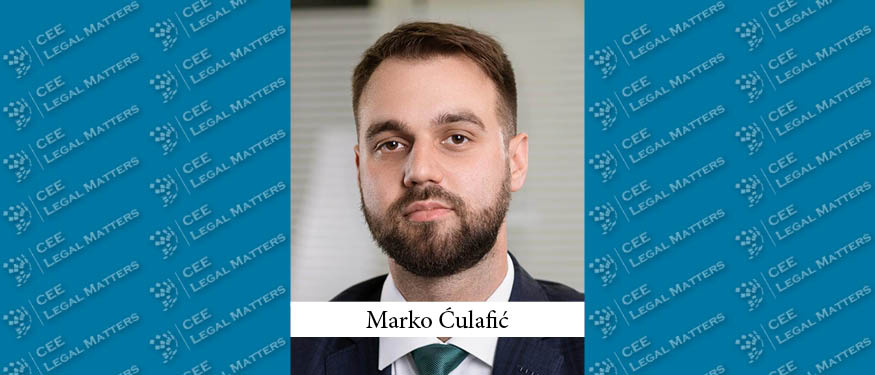
Montenegro has enacted two new laws that significantly reform its investment fund sector.
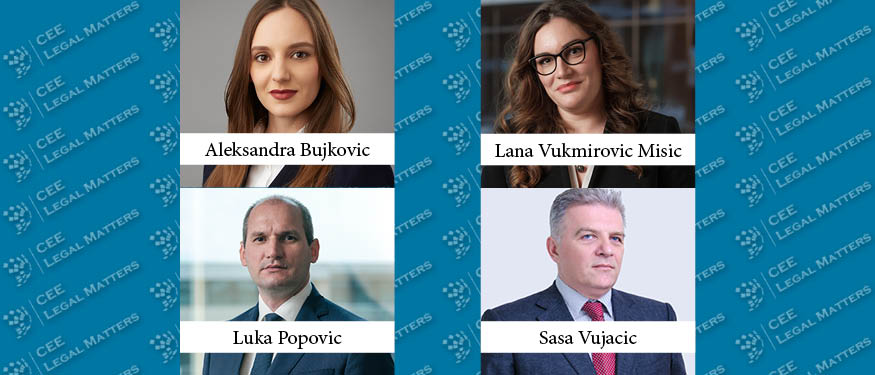
Montenegro’s real estate and hospitality sectors have been gaining momentum, driven by the country’s natural beauty, strategic location, and an increasingly favorable investment environment. Keker, Bujkovic, Pejovic Partner Aleksandra Bujkovic, JPM Partners Senior Partner Lana Vukmirovic Misic, BDK Advokati Senior Partner Luka Popovic, and Vujacic Law Office Partner Sasa Vujacic discuss the country’s competitive advantages, challenges faced by investors, and the steps needed to further enhance its appeal to foreign capital.

Vezuv Director of Legal Affairs Filip Knezevic talks about his career and the challenges of navigating the regulator’s relationship with the gambling sector.