
This article is part of a series presenting selected amendments introduced by Act XLIX of 2025 on the amendment of laws concerning the judiciary (hereinafter the "Act"), which significantly affect civil litigation in several respects.
 CEE Legal Matters
In-depth coverage of the news and newsmakers that shape Europe's emerging markets
CEE Legal Matters
In-depth coverage of the news and newsmakers that shape Europe's emerging markets
This article is part of a series presenting selected amendments introduced by Act XLIX of 2025 on the amendment of laws concerning the judiciary (hereinafter the "Act"), which significantly affect civil litigation in several respects.

CMS, working with Ashurst, has advised Renalfa IPP on the development of its EUR 1.2 billion investment program in photovoltaic, battery electricity storage systems, and wind projects across Bulgaria, Hungary, North Macedonia, and Romania. The firm also advised on securing a EUR 315 million club loan facility led by the EBRD and backed by an InvestEU loss guarantee. DGKV, and reportedly A&O Sherman and PHH, advised the lenders.

Following the March 2025 amendment to Hungary’s Fundamental Law, which elevated the use of cash as a constitutionally protected right, significant legislative changes entered into force on 1 July 2025. These amendments aim to bring existing legal provisions in line with the constitutional recognition of the freedom to pay with cash, thereby guaranteeing that consumers can continue to choose their preferred method of payment, including cash, when purchasing goods or using services.

Dentons has advised the founders of Adastra Group on the sale of a majority stake in the company to global investment firm Carlyle. Clifford Chance, working with Latham & Watkins and Ropes & Gray, advised Carlyle.
In a rapidly evolving global landscape, regulatory expectations are becoming increasingly complex. While transitional periods may offer a degree of flexibility, the pace of regulatory change demands continuous attention from market players and dedicated resources to maintain compliance and achieve long-term operational resilience.

Kinstellar has advised Hungary’s state-owned energy company MVM on the acquisition of a majority stake in Serbia’s Energotehnika Juzna Backa and Elektromontaza Kraljevo from Maneks, increasing its shareholding from 33.4% to 60%.

Starting 1 July 2025, Hungary will implement a new procedure aimed at clarifying employment relationships and addressing cases where employers fraudulently evade taxes and social security contributions. The initiative is designed to protect employees while also reducing the administrative burden on employers.

In June 2025, a foreign currency (Swiss franc) loan agreement was annulled by the Pest Central District Court, since the creditor bank had failed to properly inform the debtor (who had been a consumer) about the exchange rate risk arising from the agreement. As a consequence, the whole agreement is invalid retroactively from the date of its conclusion, so that the bank is only entitled to recover the amount it lent to the debtor; beyond that, all repayments, interest and charges must be repaid to the debtor.

A new legislative proposal aims to introduce several exciting innovations in civil litigation. The objectives include speeding up court proceedings, increasing public oversight over litigation, modernizing legal education and academic research, enhancing the Supreme Court’s (Kúria) function of ensuring legal uniformity, and reducing the administrative burden on courts related to their obligation to provide reasoning. We’ve summarized the most intriguing innovations from the proposal below.

Hungary’s M&A market may have had a slower start to the year, but activity quickly ramped up, keeping lawyers busier than ever, according to Oppenheim Partner Jozsef Bulcsu Fenyvesi. Still, Fenyvesi notes, a recent and short-lived amendment to the country’s FDI regime introduced serious delays and even potential state intervention into an already complex transactional landscape.

Jalsovszky has launched a dedicated “second opinion” service, offering clients, including individuals, companies, and even fellow lawyers, an independent external perspective in legal disputes.

An FDI notification obligation arises if a foreign investor - whether from a third country (non-EU) or, in certain cases, from an EU Member State, EEA State, or Switzerland - acquires a shareholding or influence in a Hungarian company operating in a strategic sector, based on the Hungarian Government Decree 561/2022 (XII. 23.) on FDI rules.
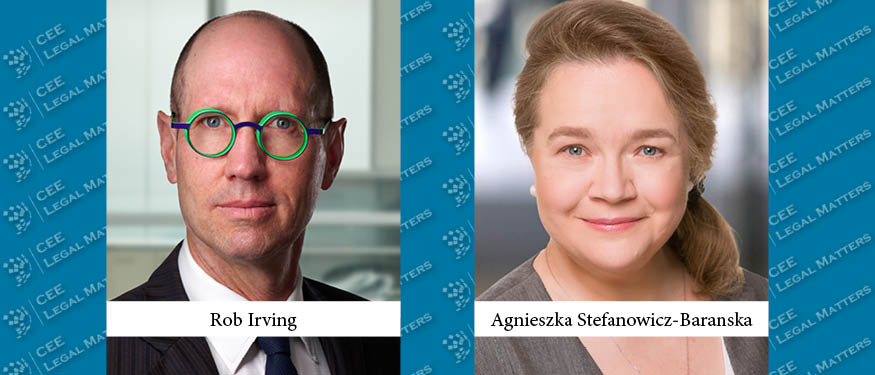
Budapest-based Dentons Partner Rob Irving has been reappointed as the Co-Head of Corporate and M&A, while Warsaw-based Partner Agnieszka Stefanowicz-Baranska has been appointed the Co-Head of the Competition and Antitrust practice.

The Hungarian Parliament adopted a tax package in June, amending the Financial Transaction Tax Act to close existing loopholes and ensure that all market participants are subject to the tax.

Kinstellar, working with Argo, has advised Altenova on its merger with Pyronova Group. KPMG Legal reportedly advised Pyronova.

Based on the provisions of Act C of 2023 on Hungarian Architecture (Hungarian Architecture Act), which entered into force on 1 October 2024, the liability insurance rules for contractors have changed. Contractors may now only undertake construction activities for which they have compulsory contractors' liability insurance, in addition to the previously introduced investments, subject to simple notification.

Elementz Legal has advised Bubblify International on its acquisition of 22 OXO-brand shopping center retail locations in the Czech Republic, Slovakia, and Hungary.
KCG Partners has promoted Krisztian Kiralyvolgyi as Partner.

DLA Piper is a global law firm with lawyers located in more than 40 countries throughout the Americas, Europe, the Middle East, Africa, and Asia Pacific. This positions us to help clients with their legal needs around the world.
With more than 60 lawyers, including 14 partners, and a staff of over 140, DLA Piper Hungary is one of the largest international law firms operating in Hungary. What makes us stand out is that we offer not only legal services but also tax and business advisory support in a fully integrated manner. We maximize synergies between legal, tax, and business advisory services to offer a unique service for our clients, particularly in regulated industries such as energy, infrastructure, life sciences, banking, and telecommunications.
We are a true full-service firm, providing our private and public sector clients with advice on all aspects of their business. This includes transaction-related advice, people and employment, commercial dealings, litigation, information technology, media and communications, intellectual property, insurance, tax, real estate, and restructuring plans.
DLA Piper Hungary has received numerous professional awards and is consistently ranked among the top law firms in Hungary by international rankings. We are ranked #1 by Mergermarket among the law firms active in Hungary based on the volume of M&A deals handled between 2005 and 2024.
